

Could a utility easement have little effect on a property’s value, or limit the improvement that makes it worth buying? The impact of utility easements on property value isn’t a fixed discount. It depends on what the easement allows, where it runs, and how those rights affect the property’s use.
It’s reasonable to want a clear answer before you buy, sell, build, or set a price. But the recorded easement and its real-world effect aren’t always the same. An underground line beneath a side yard may raise different practical concerns from visible equipment or an access route across a planned building area. Construction limits, maintenance access, privacy, and future plans can all matter.
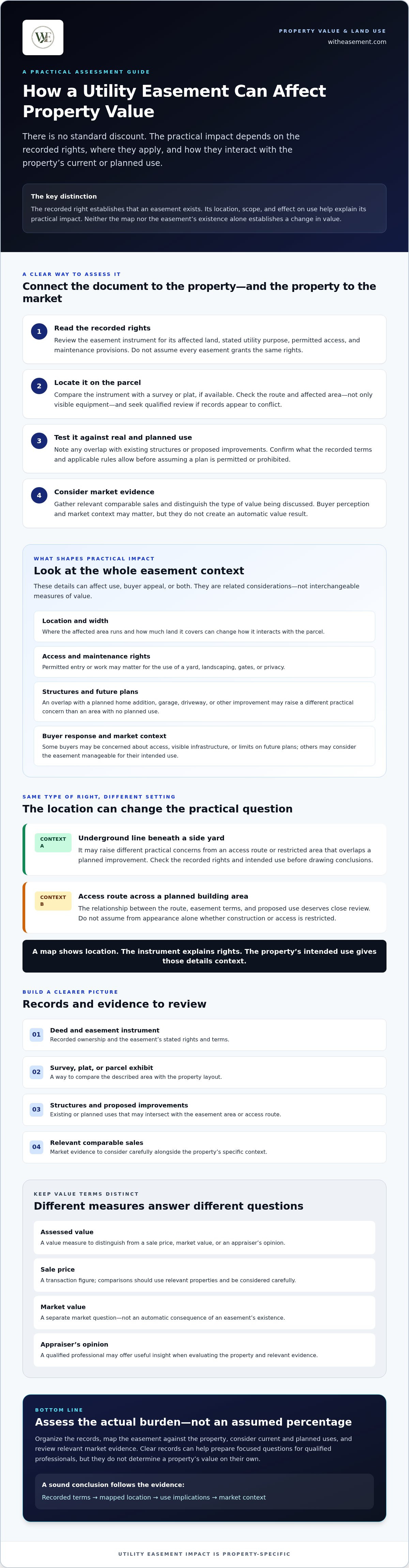
To assess the potential impact, connect the recorded rights to the property’s layout and intended use. Review the easement instrument alongside a survey or plat, note any overlap with existing structures or planned improvements, and gather relevant comparable sales. This article explains what can increase or reduce an easement’s practical impact, what evidence to review, and when an appraiser or other qualified professional may offer useful insight. The goal is a better-informed decision, not an assumed percentage or a guess based on the map alone.
Key Takeaways
- The impact of utility easements on property value depends on the rights granted and how they affect the property’s current or planned use.
- Check the easement’s recorded terms, location, access route, and relationship to structures or proposed improvements.
- Compare similar properties carefully, and distinguish assessed value, sale price, market value, and an appraiser’s opinion.
- Use the deed, easement instrument, plat, survey, and other relevant records to build a clearer picture before buying, selling, or improving.
- Organized easement records and map views can help you prepare focused questions for qualified professionals, but they don’t determine a property’s value.
What a Utility Easement Means for Property Value
A utility easement gives a utility provider or another authorized party a right to use a specified part of land for a defined utility purpose. The property owner generally keeps ownership, but use of the affected area is subject to the easement’s recorded terms. This fits the broader legal concept of an easement: a right to use someone else’s land for a particular purpose, rather than ownership of that land.
The impact of utility easements on property value doesn’t follow a standard formula. An easement’s existence alone doesn’t establish how much, if anything, a property’s value may change. The recorded right tells you an easement exists; its location, scope, and effect on the property’s use help reveal its practical impact.
What rights can a utility easement grant?
The recorded easement instrument is the key document to review. It identifies the affected land, the parties to the agreement, and the activities permitted under its terms. Depending on the instrument, the utility purpose might relate to electricity, water, sewer, gas, or telecommunications. Don’t assume that one easement grants the same access or maintenance rights as another. Read the document and check how applicable rules affect the property.
For example, an instrument may describe where utility infrastructure can be placed and what access is allowed. Compare those descriptions with a survey or plat, if available. Visible equipment on site may not show the full extent of the recorded rights or the area they affect.
Why the same easement can affect properties differently
Location is one reason. An easement across an area with no planned use may create few practical conflicts for an owner. The same type of easement could matter more if it crosses land intended for a home addition, garage, or other improvement. Whether a proposed use is restricted depends on the recorded terms and applicable rules, so confirm before treating a plan as either permitted or prohibited.
Buyer perception and market context can also influence marketability. Some buyers may be less interested in a property if they’re concerned about access, limits on future plans, or visible utility infrastructure. Others may view the easement as manageable, especially if it doesn’t interfere with how they expect to use the land.
Keep the potential effects distinct. Use concerns whether the easement limits a particular activity. Appeal reflects how buyers respond to the feature. Value is a separate market question, not an automatic result of either concern. Assess the actual terms and property context before drawing a conclusion.
How Easement Location and Restrictions Can Change the Impact
An easement’s practical burden depends on more than the utility equipment you can see. Its location, width, access route, and recorded rights all shape how it may interact with the property. A line beneath a side yard may leave a planned patio untouched, while an access route or restricted area could complicate a future addition, driveway, or other improvement.
Location, width, permitted access, maintenance rights, nearby structures, and the owner’s planned use together shape an easement’s practical burden. These details can influence the impact of utility easements on property value by changing what an owner can do, how a property feels to prospective buyers, or how easily it fits a particular buyer’s plans. Those effects are related, but they aren’t interchangeable.
Which easement details deserve close attention?
Read the instrument for its legal description, stated purpose, permitted access, and maintenance provisions. Look for how the affected area is described and whether the document explains entry or work rights. Then compare it with a current survey or parcel exhibit, if available. If boundaries don’t line up or records appear to conflict, ask a qualified professional to review them before relying on an assumed location.
Pay attention to the route across the property, not just the location of pipes, poles, or other visible infrastructure. Access for maintenance may affect gates, landscaping, privacy, or the use of a yard. The document’s terms and applicable rules determine what rights apply, so don’t infer them from appearance alone.
When could a utility easement be less disruptive?
An easement may create fewer day-to-day conflicts if it runs along a property edge or through an area that isn’t needed for the owner’s intended use. For instance, a route along a boundary may leave a planned building area available, depending on the recorded restrictions and applicable requirements. That can make the easement easier for some buyers to accept.
Still, a seemingly unobtrusive location doesn’t guarantee there will be no effect. Maintenance access could matter later, and buyers may have different priorities. A buyer planning an addition may view the same route differently from one who has no plans to expand. Market evidence and the exact easement terms can also change the assessment.
To organize the document and location details, an address or parcel-number property easement search may help surface recorded information and prepare focused questions. Confirm that the property is within the platform’s supported coverage, and verify which records are available. Use organized data as a research starting point, not a valuation or legal opinion.
How to Compare Properties and Estimate an Easement’s Market Effect
Comparing a property with an easement to one without it can help frame the question, but the comparison only works if you account for meaningful differences. Start by separating the value measures: assessed value is used for property-tax purposes, market value is an estimate of what a property could sell for under relevant market conditions, and sale price is what a buyer actually paid. An appraiser’s opinion is a professional estimate based on the assignment, available evidence, and stated assumptions. These figures may differ.
For the impact of utility easements on property value, compare properties with similar locations, condition, utility access, and buyer appeal. Then check whether their easements have comparable locations, restrictions, and access rights. A sale price difference alone doesn’t show that an easement caused the difference. One comparable sale rarely isolates the easement as the only factor.
| Easement factor | What to compare | Possible effect on use |
|---|---|---|
| Location | Boundary area versus a central or planned-use area | May leave intended uses largely available or create conflicts with plans |
| Restrictions | Limits stated in the recorded instrument | May affect building, landscaping, or other plans, depending on the terms |
| Access | Where and how the utility may enter or reach its infrastructure | May affect privacy, gates, yard use, or future maintenance activity |
What evidence helps evaluate a possible value effect?
Gather the recorded easement instrument, parcel information, a survey if available, listing history, and relevant comparable sales. Check whether the comparison properties match in location, condition, utility access, and easement burden. Ask a qualified appraiser whether the available market evidence supports an adjustment, and what assumptions that conclusion depends on. If the evidence is limited or the properties differ, make that limitation clear rather than presenting an unsupported percentage.
Why there is no universal easement discount
Rights, location, intended use, buyer demand, and market evidence interact. A narrow easement at the edge of a lot may matter little to a buyer whose plans don’t involve that area. A different buyer considering a home expansion may be more concerned if the easement crosses the proposed building site. Neither scenario establishes a standard discount; the terms and market evidence need to be assessed for that property.
Use comparable sales to identify patterns, not to claim certainty. Note what the sales do and don’t show, and distinguish observed prices from an appraiser’s reasoned opinion. That gives owners and buyers a clearer basis for weighing the easement without treating every price difference as proof of its effect.
How to Investigate an Easement Before Buying, Selling, or Improving
Use a simple review process before you rely on a map, begin a project, or make a transaction decision. The goal is to connect the recorded rights to the land and to your intended use. That gives you a stronger basis for assessing the impact of utility easements on property value without treating an incomplete record or a visible utility line as the whole story.
- 1. Locate the records. Start with the deed, recorded easement instrument, plat, survey, and other relevant property records. Search available land records, then confirm that each document refers to the correct parcel.
- 2. Read the full instrument. Check the legal description, stated purpose, recording details, exhibits, amendments, and any referenced documents. Note what land is described and what access or activities the text addresses.
- 3. Compare records with the property. Review a survey or plat, if available, alongside visible utility features and access routes. Don’t assume the visible equipment shows the full affected area.
- 4. Test your intended use. Consider a planned addition, landscaping, driveway, sale, or other decision. Identify any apparent conflict between the easement terms and your plans, then confirm uncertainties before proceeding.
- 5. Record questions and evidence. Keep copies of the documents and note unclear boundaries, conflicting descriptions, or missing referenced materials. These specifics help a professional focus their review.
Which records should owners and buyers review?
Compare the easement’s legal description and exhibits with parcel information and any available survey. Check whether recording details point to later amendments or related documents, and seek those records where possible. Maps and summaries can make information easier to review, but treat them as research aids, not substitutes for the controlling documents. Confirm which records and document types are available for the property before drawing conclusions.
An address or parcel-number recorded easement search can help organize available property information and prepare focused questions. Confirm that the property falls within supported coverage. Search results and summaries don’t establish legal rights, guarantee record completeness, or determine value.
When should a professional assess the property?
Ask a real estate attorney or other qualified legal professional to review unclear rights, boundaries, access provisions, or responsibilities. If the easement’s location or affected area is uncertain, consult a surveyor about appropriate boundary or location work. For a transaction requiring a supported value opinion, ask a qualified appraiser whether the available market evidence can address the easement’s effect. Each professional answers a different question, so share the relevant documents and your intended use.
Use Organized Easement Records to Make a Better-Informed Decision
Turn your research into a clear sequence: identify the recorded rights, map the affected area, compare those details with your intended use, then assess the available market evidence. This keeps the impact of utility easements on property value grounded in the property’s specific documents and circumstances, not assumptions based on a map or a visible utility feature alone.
Organized property data can help you find relevant information and prepare sharper questions. WithEasement lets users search recorded easement details by address or parcel number within its supported coverage. The platform can display property information alongside flood-risk, HOA, and pipeline overlays, and provide AI-powered summaries and downloadable PDF property reports. Confirm both coverage and which records, dates, and document types are available for the property you’re researching.
What a property data platform can and cannot establish
A map view can help you spot where to focus your review. A summary or report can help organize findings before you speak with a qualified professional. But these tools don’t guarantee that every relevant record is included, establish a definitive interpretation of an easement, or determine a property’s value.
Use summaries and overlays as research aids. Review the underlying recorded documents for the actual terms, and seek legal advice if you need help understanding rights or obligations. If the easement’s boundaries are uncertain, consult a surveyor. If you need a supported value opinion, speak with an appraiser. A platform report does not replace those professional assessments.
Choose the right next step for your situation
Your next move depends on the decision ahead. If you’re considering a purchase, raise unresolved questions about the easement during due diligence. If you’re planning construction or another improvement, confirm the applicable rights and affected boundaries before committing to the work. For a sale or valuation, organize the records and relevant market evidence so the appropriate professional can assess the specific question.
WithEasement’s records and reports can help you prepare for that review, provided the property is within the platform’s supported coverage. Explore WithEasement property research tools to organize available easement and property information for your next step.
Make Your Next Property Decision With Clearer Records
The impact of utility easements on property value depends on the recorded rights, where they affect the property, and how they intersect with intended use. There’s no automatic discount to apply. Review the easement documents, compare them with the property and your plans, then weigh relevant market evidence before making a purchase, sale, improvement, or valuation decision.
Organized records can make that review easier to start. WithEasement supports address or APN searches for recorded easement details within its service coverage, plus interactive property data with flood-risk, HOA, and pipeline overlays. AI-powered summaries and downloadable PDF property reports can help you organize findings and prepare focused questions for qualified professionals. Confirm that your property is covered and check which records are available. These tools support research, not legal advice or a value determination.
Explore WithEasement property research tools to organize information for your next step. With the right records and questions in hand, you can move forward with greater confidence.
Frequently Asked Questions
Do utility easements automatically lower property value?
No. A utility easement doesn’t automatically lower a property’s value or create a standard discount. The impact of utility easements on property value depends on the rights granted, the easement’s location, and whether it limits current or planned use. Buyer preferences and market evidence also matter. A recorded document identifies rights to investigate, but doesn’t establish a specific dollar effect. A qualified appraiser can assess relevant market evidence.
How much value can a utility easement take off a property?
There’s no reliable universal percentage or fixed amount. An easement outside the areas an owner uses may have a different effect from one that affects access or a planned improvement. The assessment depends on the recorded terms, site conditions, comparable sales, and the valuation question. Avoid applying a generic online estimate to a specific property. A qualified appraiser can consider whether available market evidence supports an adjustment.
Can I build on land covered by a utility easement?
It depends on the easement instrument, applicable rules, and the proposed work. Some activities may be restricted or require coordination with the utility, while other uses may be allowed. Review the controlling document and confirm requirements with the utility and relevant professionals before building. Don’t assume a map, visible conditions, or a general explanation grants permission. If the boundaries or terms are unclear, resolve those questions before committing to construction.
Does a utility easement affect a home sale?
It can influence buyer questions, disclosure discussions, perceived flexibility, or negotiations, but the outcome varies by property and market. Sellers can gather the recorded instrument and related property documents so they can explain the easement’s known scope. Buyers should review those records during due diligence and follow up on unclear terms. Disclosure duties depend on the applicable jurisdiction and circumstances, so consult a qualified real estate professional or attorney for transaction-specific guidance.
How can I find out where a utility easement is located?
Start with recorded property documents, plats, surveys, and other land records available for the parcel. Confirm that each document matches the correct legal description, and check whether referenced exhibits are included. A general map may not show the full legal terms or precise boundaries. If records conflict or the affected area remains unclear, ask a licensed surveyor or another qualified professional to review the property information and explain what further work may be needed.
Can an appraiser account for a utility easement?
Yes. A qualified appraiser can consider an easement when it’s relevant to the assignment and supported by appropriate information. Provide the recorded instrument, any available survey or plat, and details about the property’s intended use. The appraiser decides which methods and market evidence fit the question. An online estimate or AI-generated summary can help organize information, but it shouldn’t be presented as a professional appraisal or a definitive value conclusion.


