

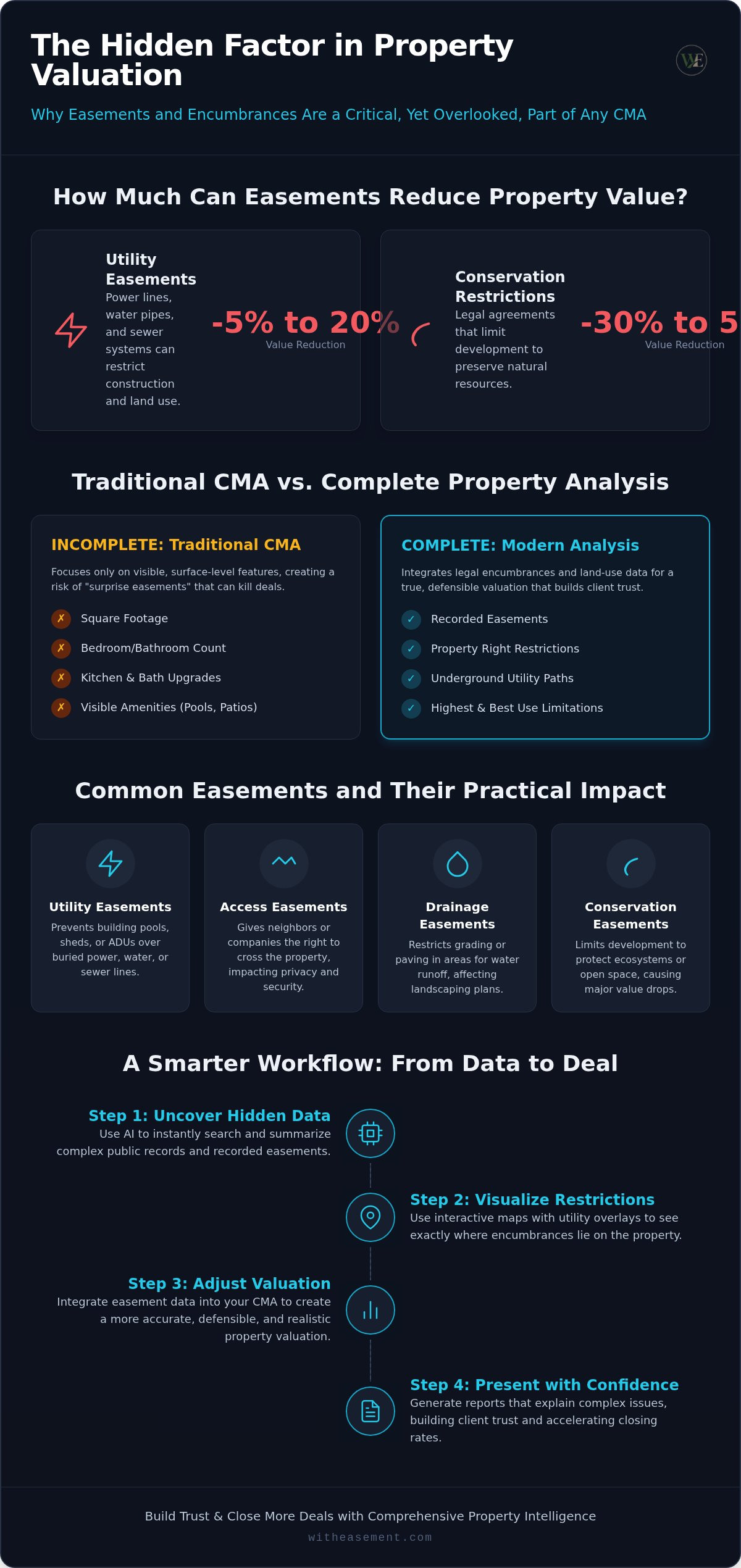
What if a single utility line buried three feet underground could slash a property’s market value by up to 20%? Most real estate professionals don't realize that utility easements can lower values by 5-20%, while conservation restrictions can cut them by 30-50%. Whether you are researching how easements affect property value or analyzing a plot in any state, these hidden details determine the true bottom line.
You likely already know the frustration of a client discovering a hidden restriction right before closing. It ruins trust, stalls your momentum, and can even kill a deal you worked months to secure. This guide helps you master the process of integrating critical land-use data into your Comparative Market Analysis for superior accuracy and client confidence.
You'll learn how to stop digging through manual records and start using AI-powered summaries to unlock hidden property insights. We'll walk through the exact steps to generate professional reports that protect your clients and increase your closing rates through effortless efficiency. By the end of this guide, you will have a repeatable system for identifying deal-breaker issues early in the valuation process.
Key Takeaways
- Understand why traditional CMAs are incomplete without encumbrance data and how to bridge the gap with high-level land-use insights.
- Learn how easements affect property value San Diego and beyond by adjusting valuations for utility, access, and conservation restrictions.
- Master a streamlined workflow that integrates recorded easement data with standard comp searches for superior valuation accuracy.
- Identify potential deal-breaker issues early by using AI-powered summaries to translate complex public records into clear client insights.
- Replace hours of manual research with professional PDF property reports that build immediate trust and accelerate your closing rates.
Why Easement Data is the Missing Piece in Traditional CMAs
A traditional Comparative Market Analysis (CMA) usually focuses on visible features like bedroom counts, kitchen upgrades, and square footage. These metrics tell part of the story, but they ignore the legal restrictions living within a property's title. To provide a truly accurate valuation, you must account for encumbrances. Understanding What is an Easement? is the first step toward mastering this data. Without this context, your price estimate remains a surface-level guess that fails to account for the actual rights being transferred.
The "Surprise Easement" is a notorious deal-killer in the real estate industry. It happens when a buyer discovers a hidden utility line or a neighbor’s right-of-way access only after their offer is accepted. These restrictions can instantly tank a property's marketability and lead to messy legal disputes. By 2026, buyers have grown to demand deeper property intelligence before they sign any contract. They don't just want to know the list price; they want to know exactly what they can build or modify on the land. Integrating easement data allows you to justify price adjustments that standard comps simply cannot explain, ensuring your valuation is grounded in reality.
The Impact of Property Rights on Marketability
Public utility easements often limit a property’s physical footprint in ways buyers don't anticipate. If a major sewer or power line runs through the backyard, your client might lose the ability to build an Accessory Dwelling Unit (ADU) or install a swimming pool. Access easements also impact privacy and security. If a neighboring parcel has the legal right to drive across your client's driveway, the property's value may decrease relative to a fully private lot. Understanding how easements affect property value San Diego requires a careful look at these specific land-use limitations. Ultimately, an encumbrance directly dictates a property's highest and best use by legally restricting the physical improvements a landowner can make.
Building Trust Through Transparency
Uncovering data that other agents miss positions you as a tech-forward innovator. You aren't just showing houses; you're providing a comprehensive risk assessment. Disclosing recorded easements early in the listing process reduces your professional liability and prevents deals from collapsing during the eleventh hour. You can leverage AI for real estate due diligence to translate dense legal jargon into clear, actionable insights for your clients. This approach makes complex public records digestible and builds a foundation of trust. It ensures your valuations remain authoritative even when the property has significant restrictions.
How to Identify Relevant Easements for Your Analysis
Identifying easements starts with proper categorization. You need to distinguish between utility, private access, conservation, and drainage easements. Each type restricts land use differently. For example, a drainage easement might prevent any grading or paving in a specific zone. In a residential context, you must also differentiate between appurtenant easements, which run with the land, and easements in gross. The latter belongs to a specific entity, like a utility provider. Both impact marketability and long-term property use.
Visualizing these restrictions is essential for a professional CMA. Locating the subject property on a high-resolution interactive map allows you to see where property lines and encumbrances intersect. Analyzing pipeline overlays and flood risk zones provides a layer of intelligence that a standard MLS search lacks. Seeing how easements affect property value San Diego involves looking beyond the surface to find these hidden legal boundaries. You can search recorded easements instantly to verify these details before presenting to your client.
Utility and Pipeline Overlays
Gas and water line locations are critical for buyers planning pools or backyard expansions. If a high-pressure gas line runs through a proposed construction site, the project is likely dead. Digital tools make this easy. Using digital overlays allows you to visualize this underground infrastructure without hiring a surveyor for preliminary research. Many properties contain public utility easements (PUE) that aren't visible to the naked eye. Identifying these early protects your client from expensive mistakes. It ensures your valuation accounts for restricted building footprints.
HOA and CC&R Considerations
Homeowners Association (HOA) rules often act as private easements. These Covenants, Conditions, and Restrictions (CC&Rs) dictate everything from paint colors to the height of a fence. Details matter. Integrating HOA documents into your initial property research is vital for a complete analysis. You must check for recorded restrictions that limit property modifications or specific land uses. These private encumbrances are just as legally binding as a utility right-of-way. Failing to disclose them can lead to buyer's remorse. A comprehensive CMA includes these private rules to give the buyer a transparent view of their future property rights.
Step-by-Step: Generating a CMA Report with Integrated Easement Data
Creating a high-level CMA requires a structured approach that merges market trends with physical land constraints. Follow these five steps to ensure your valuation is both accurate and defensible. You'll move beyond simple price-per-square-foot metrics and into the deep property intelligence that 2026 buyers expect.
Step 1: Establish a baseline. Start with a standard comp search in your local MLS. This provides a price range based on recent sales, square footage, and neighborhood trends. It sets the market context before you dive into the specific legal details of the land.
Step 2: Pull recorded data. Use a property intelligence platform to access the specific recorded easements for your subject property. This step uncovers restrictions that aren't visible in a standard listing. It's the foundation for understanding how easements affect property value San Diego and ensuring your report is grounded in legal reality.
Step 3: Analyze the burden. Compare the easement profile of your subject property against your top three comps. If your subject has a significant utility easement while the comps have clear titles, you must adjust the price downward. This analysis helps you justify your valuation to both buyers and sellers.
Step 4: Simplify the language. Use AI summaries to distill complex legal descriptions into clear, client-friendly insights. This removes the friction of technical jargon and ensures your client understands exactly how the land use is restricted.
Step 5: Generate the report. Export a professional PDF property report. This document combines your pricing analysis with visual land data to build immediate client trust. It serves as a single source of truth for the entire transaction.
Selecting the Right Comparable Properties
A comp with a similar easement profile is more accurate than one based solely on square footage. If two houses are identical but one has a restricted backyard due to a drainage easement, they aren't truly comparable. You should adjust your comparability scores based on these shared land-use restrictions. Use interactive property maps to identify neighbors with similar parcel constraints. This ensures your baseline is as close to the subject property's reality as possible.
Formatting Your PDF Property Report
Your final presentation needs to be visual and easy to digest. Ensure the easement map is prominent so the client can immediately see the restricted zones. Include a clear legend for pipeline and flood zone overlays to avoid confusion. Most importantly, add a summary section that explains the "So What?" for the buyer or seller. This clarifies how the data impacts their specific goals, whether it's building a pool or listing at a premium price point.
Analyzing the Impact: How Easements Influence Property Valuation
Valuation involves more than just counting bedrooms and bathrooms. You have to look at the rights attached to the dirt. Gross acreage is a misleading number if a large portion of the land is restricted. When you explain how easements affect property value San Diego, you're really explaining the difference between owning land and being able to use it. A property with a heavy easement burden simply doesn't command the same price as an unencumbered parcel.
Privacy is another critical factor in your financial analysis. Access easements that let neighbors cross a property create a "privacy penalty." This shared usage typically drives market value down because it compromises the owner's exclusive control. On the other hand, positive easements like view protections or deeded beach access can skyrocket market demand. These legal guarantees ensure the property's best features remain permanent, justifying a higher price point than nearby comps.
Thorough due diligence has a high ROI for your business. It prevents escrow fallouts that cost you weeks of wasted effort. Identifying these issues early allows you to price the property correctly from day one and sets realistic expectations for all parties involved.
Utility Easements vs. Development Potential
Development rights are often tied to specific zones on a parcel. A 10-foot utility easement can easily block a $50,000 ADU project or a new swimming pool. These restrictions create mandatory setbacks that limit where your client can build. Understanding how easements affect property value San Diego is essential for setting expectations with developers or homeowners planning upgrades. You must adjust your valuation to account for this lost potential. If a property can't be expanded, it shouldn't be priced against comps that have full development freedom. Check your property's building restrictions to avoid overpricing.
Flood Risk and Insurance Costs
Flood zone overlays change the math for any buyer. Mandatory insurance premiums increase the monthly cost of ownership, which directly impacts affordability. You need to reflect these extra costs in your CMA. Properties in high-risk zones usually require a price adjustment to stay competitive. Using precise data to justify these numbers builds trust with your clients and ensures your valuation is realistic. It turns a potential deal-breaker into a transparent part of the negotiation process.
Streamlining Your Workflow with WithEasement Professional Reports
Manual property easement searches are a major bottleneck for high-volume agents. Spending hours navigating fragmented county websites or waiting on title companies stalls your productivity. You need a solution that keeps pace with the modern market. Leveraging a WithEasement Membership provides instant access to recorded data, allowing you to shift from research to results without the traditional friction. It’s about working smarter, not harder.
Realtors who master these tools gain a significant edge. You can pull recorded easements, HOA data, and pipeline overlays from a single, centralized dashboard. This efficiency allows you to generate a CMA that is both deep and defensible. When you can explain how easements affect property value San Diego with data-backed confidence, you win the trust of even the most skeptical clients. It transforms you from a salesperson into a strategic advisor.
The Power of AI in Property Intelligence
WithEasement’s AI Summaries change the way you interact with public records. The technology distills complex recorded documents into clear, actionable bullet points. You no longer need a law degree to explain property encumbrances or archaic legal descriptions. The AI does the heavy lifting, identifying the "So What?" for every restriction found on the title. This centralized platform enables you to visualize land-use data and generate a professional report in seconds, ensuring you never feel overwhelmed by technical details. It’s a high-tech utility designed for immediate clarity.
Next Steps: Elevate Your CMA Strategy
Integrating WithEasement data into your listing presentation creates a powerful Unique Selling Proposition (USP). You can offer a "Property Intelligence Pack" that includes a PDF Property Report for every subject property. This level of transparency sets you apart from agents who only look at surface-level comps. It proves you understand the intricacies of how easements affect property value San Diego and other high-stakes regions. You show the client you’ve already done the heavy lifting of organizing their property’s intelligence.
Generating these reports is the final step in securing a listing and building long-term trust. These professional documents combine pricing and land data into a cohesive presentation that buyers and sellers value. Sign up for a membership today to unlock national property data and specialized reporting tools. Elevate your workflow and start providing the superior valuation accuracy your 2026 clients demand.
Master the Future of Property Valuation
Accurate valuations in 2026 require more than just looking at the house next door. You've learned that identifying encumbrances early prevents deal-killing surprises and ensures your pricing is defensible. By mastering how easements affect property value San Diego, you position yourself as a tech-forward expert who values transparency over simple speed. This depth of intelligence is what builds lasting client trust in a competitive market.
Efficiency is now your greatest competitive advantage. You can replace hours of manual research with a centralized platform that delivers instant results. Use AI-powered property summaries to interpret dense records and generate professional PDF reports that win listings. It's time to move beyond surface-level data and embrace a deeper level of property intelligence. You have the ability to unlock the full potential of every parcel you analyze with total confidence.
Start generating professional property reports with a WithEasement Membership today. Access our comprehensive easement and HOA database to lead the market with professional clarity. You're ready to provide the superior accuracy your clients deserve.
Frequently Asked Questions
What is the most important type of easement to include in a CMA?
Utility and access easements are the most critical for a Comparative Market Analysis. These encumbrances directly limit how a buyer can use the land, such as where they can build an ADU or a pool. Understanding how easements affect property value San Diego and beyond allows you to adjust your baseline price for these physical and legal restrictions. Ignoring these can lead to an inaccurate valuation that doesn't reflect the property's true marketability.
Can an easement significantly change the appraised value of a home?
Yes, easements can drastically shift a property's appraised value. Industry data shows that utility easements can lower property values by 5-20%, while more restrictive conservation easements might reduce value by 30-50%. The size and location of the easement determine the severity of the impact. An easement that cuts through the center of a lot is much more damaging than one running along a back fence line.
How do I find recorded easements without going to the county recorder office?
You can access recorded easements instantly through a centralized property intelligence platform. Platforms like WithEasement allow you to search by address or APN to pull recorded documents without visiting a county office. This digital approach saves hours of manual work and provides immediate visualization through interactive maps. It's the most efficient way to gather the data needed for a comprehensive and accurate CMA.
Is easement data included in a standard MLS listing?
Standard MLS listings rarely include comprehensive easement data. While some agents might mention a shared driveway, many utility and drainage easements remain hidden until a title search is performed. Relying solely on the MLS often leads to missing critical encumbrances that affect market value. Professionals should always verify recorded data independently to ensure they are providing the most accurate property intelligence to their clients.
How do I explain a negative easement to a potential buyer?
Explain a negative easement by focusing on the specific restriction it imposes on the land. For example, a negative easement might prevent a neighbor from building a structure that blocks your client's view. While the term sounds unfavorable, it often protects the property's most valuable features. Frame these restrictions as legal guarantees that preserve the home's long-term market appeal and environmental surroundings.
What happens if I generate a CMA and miss a hidden easement?
Missing a hidden easement can lead to escrow fallouts and a significant loss of client trust. If a buyer discovers a restriction after their offer is accepted, they may demand a price reduction or walk away entirely. This oversight can also create professional liability for the agent. Using thorough research tools early in the process helps you identify these deal-breaker issues before they become expensive problems.
How does WithEasement’s AI summary tool handle complex legal language?
The AI summary tool distills dense recorded documents into clear, actionable bullet points. It identifies the core restrictions within complex legal descriptions, so you don't need a law degree to explain them to clients. This feature simplifies the research process by highlighting the "So What?" of every encumbrance. It allows you to visualize how easements affect property value San Diego and other regions with total clarity.
Are PDF property reports from WithEasement considered official title documents?
No, PDF property reports are research and presentation tools rather than official title documents. While they provide highly accurate recorded data and AI-powered summaries, they don't replace title insurance or a formal land survey. These reports are designed to build client trust during listing appointments and provide a baseline for due diligence. They offer a professional visualization of the land's intelligence to accelerate your decision-making.


